About this service
Understanding TPO, EPDM & PVC Membrane Roofing
Single-ply membrane roofing covers a flat or low-slope roof with one flexible, waterproof sheet. There are no shingles to lift and no overlapping layers to hide leaks — the membrane, its seams, and its flashing do all the work. That makes the choice of system, and the quality of the seam work, the whole job.
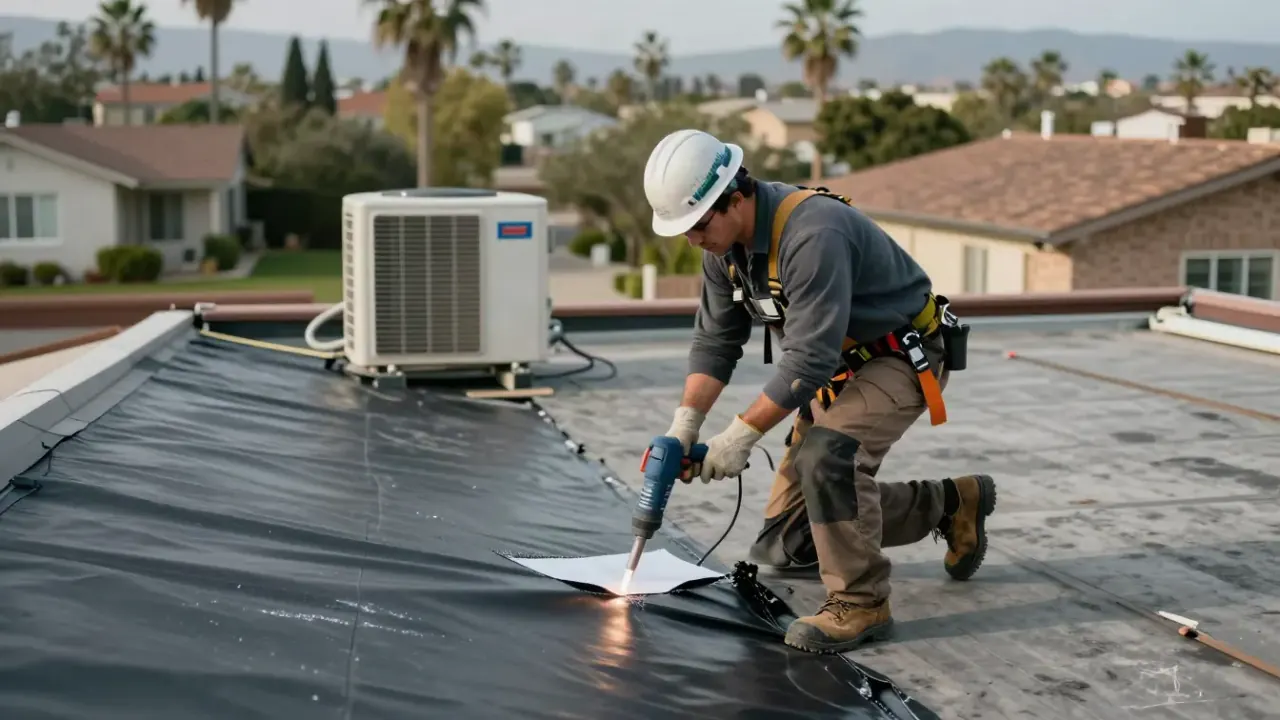
TPO roofing is a white, reflective thermoplastic membrane, and for TPO roofing West Covina property owners often choose it for bright, low-slope roofs that face long hours of sun. Its seams are heat-welded into one continuous sheet, and its bright surface reflects the valley sun instead of absorbing it, which helps keep the building cooler and supports Title 24 cool-roof rules for low-slope roofs in California. EPDM roofing is a synthetic rubber membrane, installed fully adhered or ballasted, that stays flexible through temperature swings and handles foot traffic from rooftop equipment and service visits. PVC roofing is a chemical-resistant thermoplastic with heat-welded seams that stay strong where grease, oils, and chemicals reach the roof — a common problem near restaurant vents and exhausts. Every system needs the same careful details: sealed seams, flashed penetrations around vents and skylights, and drainage that moves water off the roof before it can pond. Not sure which membrane your roof already has, or where the water is getting in? Start with our roof inspection and assessment or roof leak repair service, and we will identify the system and the failure point before recommending anything.
- ✓ Heat-Welded Seams That Stay Sealed
- ✓ The Right Membrane for Your Roof
- ✓ Drainage and Ponding Corrected
- ✓ Work Backed in Writing