Every roof reaches a point where repairs stop making sense. The question is how to tell when that point has arrived — before a small problem turns into water damage inside your home. This guide walks through the signs California homeowners should watch for, what they mean, and what a professional inspection covers.
A roof rarely fails all at once. It wears down a little at a time, so the decision should be based on the condition of the whole roof, not on one missing shingle or one leak. Start with the signs below, then get an honest inspection — our roof inspection and assessment service does exactly that.
How Long Do Roofs Last in California?
Roof lifespan depends on the material, the quality of the installation and the weather the roof has faced. As a rough guide, asphalt shingle roofs often last around two to three decades, metal roofs often last several decades longer, and tile and slate roofs can last longer still when they are well maintained. But these are averages, not promises. A roof that has faced years of intense sun, strong winds and heavy rain may age faster than one in a milder spot, even if the two roofs are the same age.
Age alone is never the whole story. A twenty-year-old roof that has been maintained can still have years of life left, while a fifteen-year-old roof that has never been inspected and has suffered storm damage may already be near the end. Age is a starting point, not the decision itself.
Signs It May Be Time to Replace Your Roof
Your roof is near or past its expected lifespan. If your roof is approaching the end of the lifespan typical for its material and it is showing other problems as well, replacement is usually the more sensible option. Repeated repairs on a roof that is already old tend to buy less and less time with each visit.
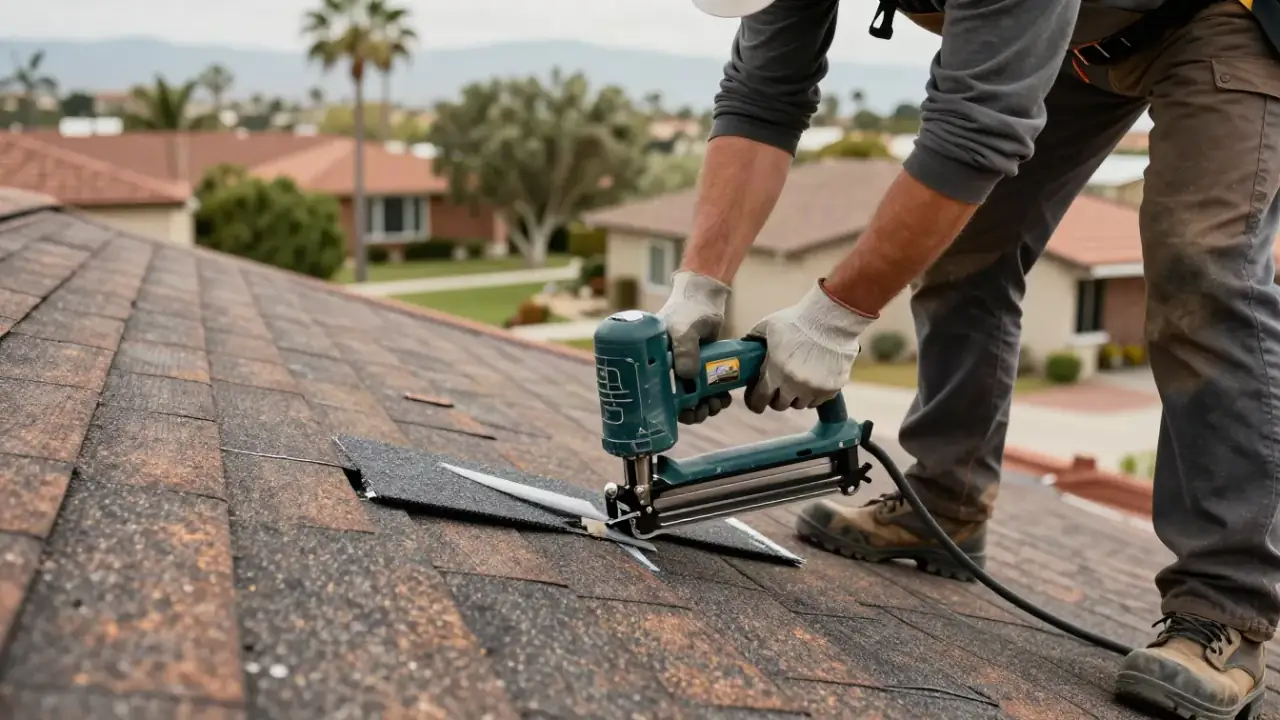
Shingles are curling, cracked or missing. Shingles that curl at the edges, crack across the middle or go missing after wind are no longer shedding water the way they should. A few damaged shingles can be repaired, but when the damage is spread across the whole roof, the roof itself is wearing out.
You are finding granules in the gutters. Asphalt shingles are coated with granules that protect them from the sun. As shingles age, those granules wash off and collect in gutters and downspouts. Heavy, ongoing loss on an older roof means the shingles are losing their protection.
The roofline is sagging. A sagging roofline is a serious sign. It can mean the decking underneath has weakened from moisture, or that the structure itself has a problem. Do not ignore a sag — get it checked promptly by a professional, and do not climb onto a sagging roof yourself.
You can see daylight in the attic. Go into the attic on a bright day and look up. If you can see pinpoints of daylight coming through the roof boards, water can get through those same gaps. Also look for damp insulation, dark stains on the decking and any sign of mold, which all point to water getting in over time.
Leaks keep coming back. One leak, properly repaired, is normal roof ownership. Leaks that return in different places, or the same leak that keeps reappearing after repair, usually mean the roofing system as a whole is failing rather than one small detail. Our roof leak repair team can tell you honestly when a leak is a one-off fix and when it is a symptom of a wider problem.
Your energy bills have climbed. A roof that no longer insulates properly forces your heating and cooling system to work harder. If your bills have risen and nothing else has changed, poor ventilation and a worn roof are worth checking — see our roof ventilation service for the airflow side of the problem.
What a Roof Inspection Covers
A proper inspection looks at the whole roofing system, not just the surface: the shingles or tiles, the flashing around chimneys, vents and skylights, the valleys, the gutters and downspouts, and the attic underneath — the decking, the insulation and the ventilation. The inspector should explain what was found in plain language and lay out your options: what can be repaired, what should be watched, and whether replacement is the better choice.
Repair or Replace? A Simple Way to Decide
Ask three questions. First, how old is the roof compared with the lifespan typical for its material? Second, how widespread is the damage — one area, or the whole roof? Third, how often are you paying for repairs, and are they lasting? If the roof is young, the damage is local and repairs hold, repair is usually right. If the roof is old, the damage is widespread and repairs keep failing, replacement is usually the better investment.
Replacement is also the right time to fix underlying issues properly: worn underlayment, tired flashing and poor ventilation can all be addressed while the roof is open. If you decide to replace, our roof replacement and installation service covers the full job.
What to Do Next
If several of the signs above sound familiar, do not wait for the next heavy rain to decide for you. Book an inspection, get an honest assessment, and compare your options in writing before any work starts.
If you would like that clear picture, contact our team or call (626) 778-2088. We serve homeowners across California, we are available 24/7, and we will tell you plainly whether your roof needs repair, replacement, or simply a little more time.
Frequently Asked Questions
How do I know if my roof needs replacing or just a repair? It depends on the roof's age, how widespread the damage is and whether repairs keep holding. A young roof with local damage usually needs a repair; an old roof with widespread damage usually needs replacement.
Can I replace only part of my roof? Sometimes, if the damage is limited to one slope or section and the rest of the roof is in good shape. But it can leave a visible seam, so discuss the trade-offs with your roofer first.
What happens during a roof replacement? The old roofing is removed, the decking is checked and repaired where needed, new underlayment and flashing are installed, and the new roofing material is laid course by course.
How long does a roof replacement take? It depends on the size and complexity of your roof and the material chosen. Most homes take a few days, and your roofer should give you a clear schedule before work starts.
Should I replace my roof before selling my home? A worn roof can put buyers off and show up in a home inspection. Whether replacement is the right move before a sale depends on the roof's condition — an inspection and an honest conversation with your roofer will help you decide.