California storms can be sudden and strong: high winds, heavy rain and falling branches can damage a roof in a single night. What you do in the hours and days after a storm matters — for your safety, for your home, and for any insurance claim. This guide covers how to spot storm damage safely, what to document, and when to call a professional.
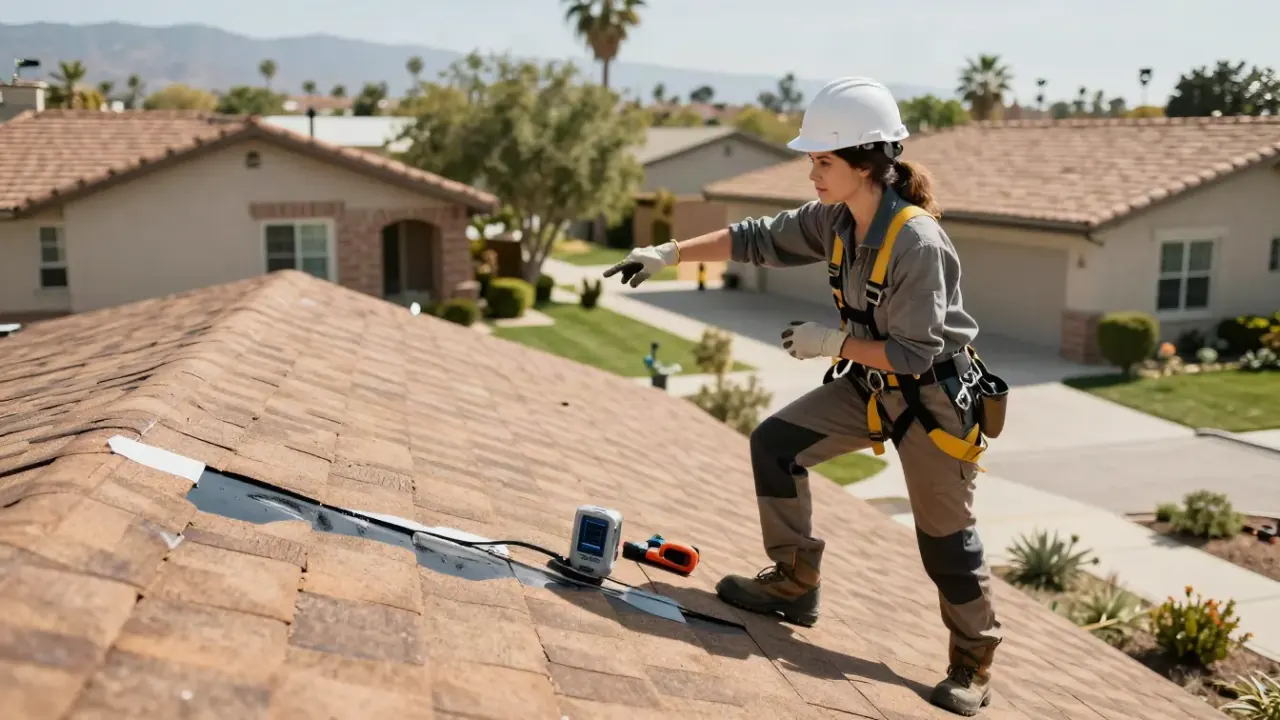
The first rule is the most important one: never climb onto a wet or damaged roof. A roof that looks fine from the street can be slippery or weakened underneath, and a fall can cause serious injury. Everything in this guide can be done from the ground, from a window, or from inside the attic — anything that needs a ladder or a roof walk belongs to a professional.
Stay Safe First
Before you check anything, make sure it is safe to go outside. Wait until the storm has fully passed, watch for fallen power lines and do not touch them, and stay clear of trees and branches that look loose or broken. If you can smell gas or see a ceiling bulging with trapped water, leave the area and call for help — a bulging ceiling can release a large amount of water suddenly, so do not poke at it.
If water is actively coming into your home, move valuables out of the way, place buckets where water is dripping, and call for emergency help. Our emergency roof leak repair team is available 24/7, and the sooner a leak is controlled, the less damage it can do.
What to Look for From the Ground
Walk around your home and look up. You are looking for changes from how the roof looked before the storm — anything new is worth noting.
- Missing, lifted or creased shingles: Shingles that have blown off, lifted at the edges or folded back are the most common wind damage. Even slightly lifted shingles may have lost their seal and can let water in during the next rain.
- Dents and impact marks: Hail and flying debris can dent metal roofing and crack or chip tiles. Look for fresh marks, especially on the side of the roof that faced the wind.
- Fallen branches and debris: Branches resting on the roof can puncture roofing or damage gutters, and small debris can block valleys and force water under shingles.
- Gutter damage: Gutters that are bent, detached or overflowing need attention. A gutter that has pulled away from the fascia can let water run down the wall and into the home.
- Damaged flashing and vents: Look at the metal around chimneys, vents and skylights. Flashing that has lifted, bent or gone missing is a common source of leaks after a storm.
Check Inside the Home Too
Storm damage does not always show on the outside first. Inside, look for new water stains, peeling paint, damp spots in the attic, and any musty smell that was not there before the storm. In the attic, check the insulation for damp patches and the decking for dark stains — water often travels along the decking, so the entry point and the stain are rarely in the same place.
If you find interior damage, take photos before you move anything, and note the date and time.
Document the Damage With Photos
Good documentation makes everything after a storm easier. Take wide photos of each side of the roof from the ground, then closer photos of anything that looks damaged — missing shingles, dents, a fallen branch, a bent gutter. Photograph the inside damage too, including stains and damp insulation. Keep the originals; damaged materials can be part of the record.
Photos taken on the day of the storm, or as soon as it is safe afterwards, are the most useful. Keep older photos of your roof too, because they show what changed.
Temporary Protection Until Repairs Are Done
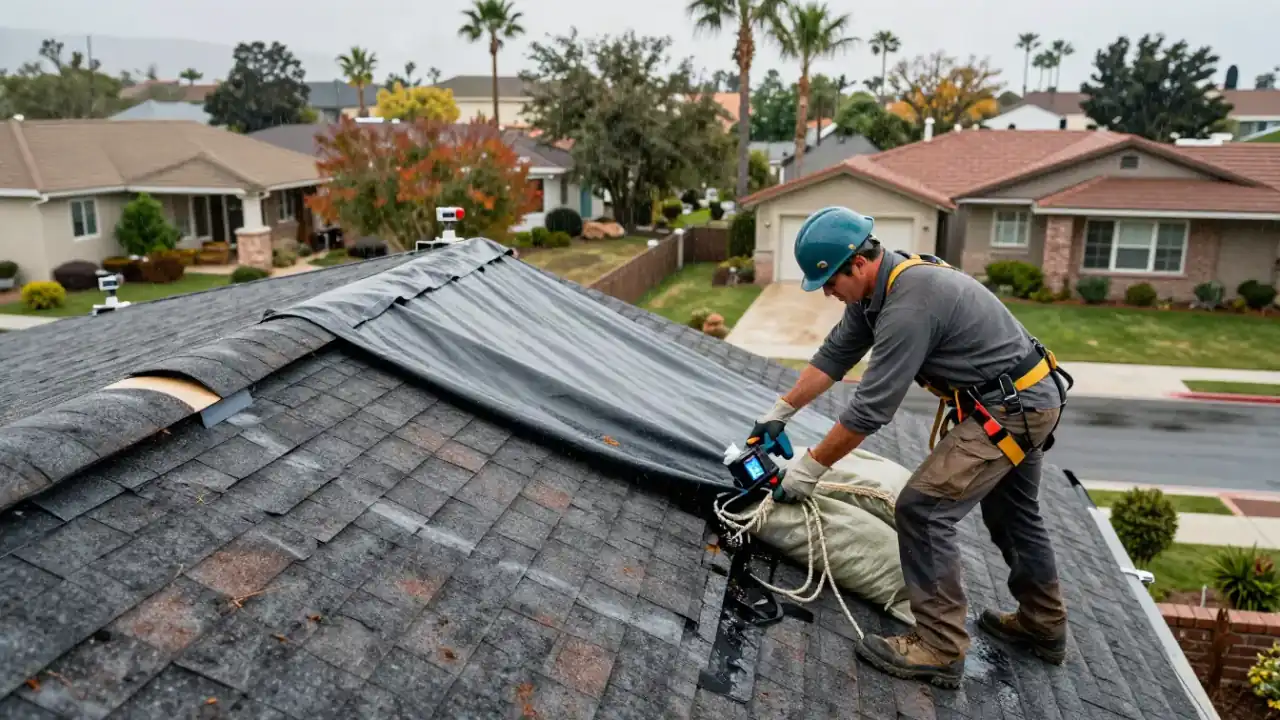
If part of your roof is open to the weather, it needs temporary protection until a proper repair can be made — installed by a professional. A roofer can fit a tarp securely over the damaged area, so water runs off rather than pooling underneath. A loose tarp can cause more damage than it prevents, so this is not a job to improvise.
Do not attempt a temporary repair yourself on a damaged roof. If water is coming in, control it from inside with buckets and towels and call a roofer. If the damage is severe — a large section of roof missing, or structural damage you can see from the ground — stay out of the affected rooms and get professional help.
Call for a Professional Inspection
Even if the damage looks minor, a professional inspection after a storm is worth having. Some damage is hard to see from the ground: lifted shingles, cracked tiles hidden under debris, flashing that has shifted just enough to leak. An inspector will check the whole roof and explain what needs repair now and what should simply be watched.
Our storm damage roof repair service covers that inspection and the repair that follows it. If you are unsure whether to claim on insurance, an inspection report is a good starting point for that conversation.
After the Storm: A Short Checklist
- Stay safe: wait for the storm to pass, avoid fallen lines and loose branches, and never climb a wet or damaged roof.
- Check from the ground: missing shingles, dents, fallen branches, gutter damage and lifted flashing.
- Check inside: new stains, peeling paint, damp insulation and musty smells, especially in the attic.
- Document everything with dated photos, inside and out, before cleaning up.
- Control active leaks from inside and call for emergency help if water is coming in.
- Book a professional inspection, and arrange temporary protection through your roofer if part of the roof is open.
Frequently Asked Questions
How soon should I check my roof after a storm? As soon as it is safe — the same day if possible. The sooner damage is found, the sooner it can be protected.
Can I inspect my own roof after a storm? You can check from the ground, from windows and from inside the attic. Anything that needs a ladder or walking on the roof should be left to a professional.
What if I cannot see any damage? That is good news, but it is not a guarantee. Some storm damage is hard to see from the ground, so if the storm was severe, a professional inspection is still worth having.
Should I call my insurer before or after a roofer? Get the roof inspected first. A roofer's inspection and photos give you a clear record to share with your insurer.
Will a tarp damage my roof? A tarp fitted properly by a roofer protects the roof until repairs are done. A loose or poorly fitted tarp can flap in the wind and trap water, which is why it should be installed professionally.