A roof lasts longest when it is looked after a little at a time. Most roof problems start small — a blocked gutter, a cracked flashing, a patch of moss — and grow quietly until they become a leak or a repair far bigger than the original problem. This checklist gives California homeowners a simple routine for the year: what to check, when to check it, and when to call a professional instead.
You do not need to climb onto your roof to follow this checklist. Almost everything here can be checked from the ground with binoculars, from a ladder at gutter height, or from inside the attic. Anything that needs walking on the roof belongs to a professional.
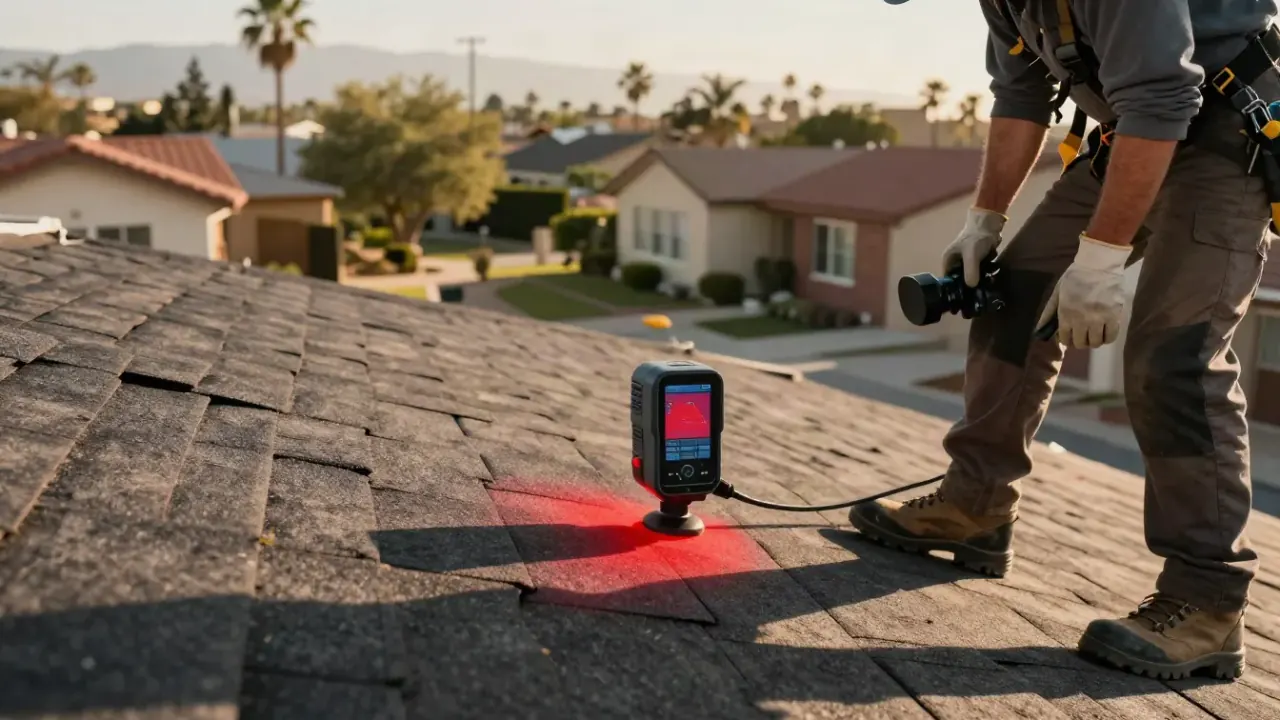
Spring: Clear Out Winter and Check for Damage
After the rainy season, walk around your home and look up. Check for shingles that are missing, cracked or curling, and for tiles that have shifted or broken. Look at the gutters: are they clear, or still holding leaves and debris from winter? Clear them out, and check that downspouts run freely.
Inside, visit the attic. Look for damp insulation, dark stains on the decking and any sign of mold, which all point to water getting in over winter. Check that the attic ventilation is clear — soffit vents blocked by insulation cannot bring fresh air in. If you are unsure what you are looking at, our roof inspection and assessment service can give you a clear picture.
Summer: Heat, Sun and Ventilation
California summers are hard on roofs. Heat bakes shingles, dries out sealants and pushes attic temperatures high. In summer, check that your attic is ventilating properly: on a hot day the attic should be warm, not stifling, and air should be moving through it. If the upstairs is always hot, poor ventilation may be part of the problem — see our roof ventilation service.
Summer is also the best time to look at moss and algae. The dark streaks on many California roofs are algae feeding on the shingles, and moss holds moisture against the surface and lifts shingle edges. Do not pressure-wash your roof — high pressure strips granules from shingles and can force water under tiles. Our roof cleaning service uses gentle soft washing instead.
Fall: Prepare for Rain
Fall is the most important season for roof maintenance in California, because it is your chance to get the roof ready before the rain arrives. Clean the gutters and downspouts thoroughly — leaves from nearby trees are the usual culprit — and check that water flows away from the home, not towards the walls. Clear leaves and debris from the valleys, where two roof planes meet, since trapped debris dams water up under the shingles.
Check the flashing around chimneys, vents and skylights for cracks, lifting or gaps, and look at the sealant around vent pipes. Check trees near the house: branches that overhang the roof should be trimmed back, so they cannot scrape the roofing in wind or fall on it in a storm. If any of this is beyond what you can safely reach, book a professional visit before the rain starts.
Winter: Watch and Respond
During the rainy season, your job is mostly to watch. After each heavy rain, check inside for new stains on ceilings and walls, and listen for dripping in the attic. Check that gutters are not overflowing — overflow usually means a blockage.
If you find a leak during winter, do not wait for dry weather to report it. Control the water from inside with buckets and towels, move valuables out of the way, and call for help. Our emergency roof leak repair team is available 24/7, and a leak found early in the rainy season is far easier to fix than one left until spring.
The Annual Professional Check
Once a year, have a professional look at your roof — ideally in fall, before the rain, or in spring, after it. A professional inspection covers what a ground-level check cannot: the flashing and valleys up close, the underlayment, the attic ventilation, and small problems such as lifted shingles that are easy to miss from below.
Regular maintenance is also how small repairs stay small. A flashing repair caught in fall is a quick job; the same flashing left through a wet winter can become a leak and a far larger repair.
Roof Maintenance Checklist at a Glance
- Gutters and downspouts: Clear at least twice a year, and check that water drains freely and away from the home.
- Flashing: Check around chimneys, vents and skylights for cracks, lifting or gaps each fall.
- Shingles and tiles: Look for missing, cracked, curling or shifted pieces every spring and fall.
- Attic ventilation: Make sure soffit vents are clear of insulation and air is moving through the attic.
- Moss and algae: Treat growth early with gentle cleaning — never pressure-wash a roof.
- Trees: Trim back branches that overhang the roof before storm season.
- After every storm: Check from the ground for missing shingles, fallen branches and gutter damage, and check inside for new stains.
- Once a year: Book a professional inspection, ideally before the rainy season.
When to Call a Professional
Call a professional if you find any of these: a sagging roofline, daylight visible through the roof boards in the attic, widespread shingle damage, leaks that keep returning, or anything that would need you to climb onto the roof to check properly. Also call if you are unsure about what you are seeing — describing a stain to a roofer costs nothing. If you spot any of these signs, contact our team or call (626) 778-2088. We serve homeowners across California and we are available 24/7.
Frequently Asked Questions
How often should I have my roof professionally inspected? Once a year is a good routine for most homes, and always after a severe storm. Homes under large trees or in areas with heavy weather may benefit from a check twice a year.
How often should gutters be cleaned? At least twice a year — once in fall after the leaves drop, and once in spring. Homes with large trees overhead may need cleaning more often, especially before the rainy season.
Is moss on my roof a problem? Yes. Moss holds moisture against the roof surface, lifts shingles and tiles, and can lead to leaks over time. It should be removed gently and treated at the root, not pressure-washed off.
Can I walk on my roof to check it? It is safer not to. Roofs are slippery, steep and easy to damage underfoot, and a fall can cause serious injury. Most checks can be done from the ground, from a window or from the attic — leave roof walking to a professional.
What does a maintenance visit cover? A typical visit includes a full roof and attic check, gutter and valley clearing, a look at flashing and ventilation, and small repairs where needed.